
The Outcome
The impact of our design system rebuild was undeniable. Designers and developers saved hours each week, no longer bogged down by searching for assets or troubleshooting inconsistencies. A unified system meant fewer visual discrepancies across projects. And most importantly, the structured approach enabled seamless future growth, ensuring that Millipore’s digital products could scale efficiently.
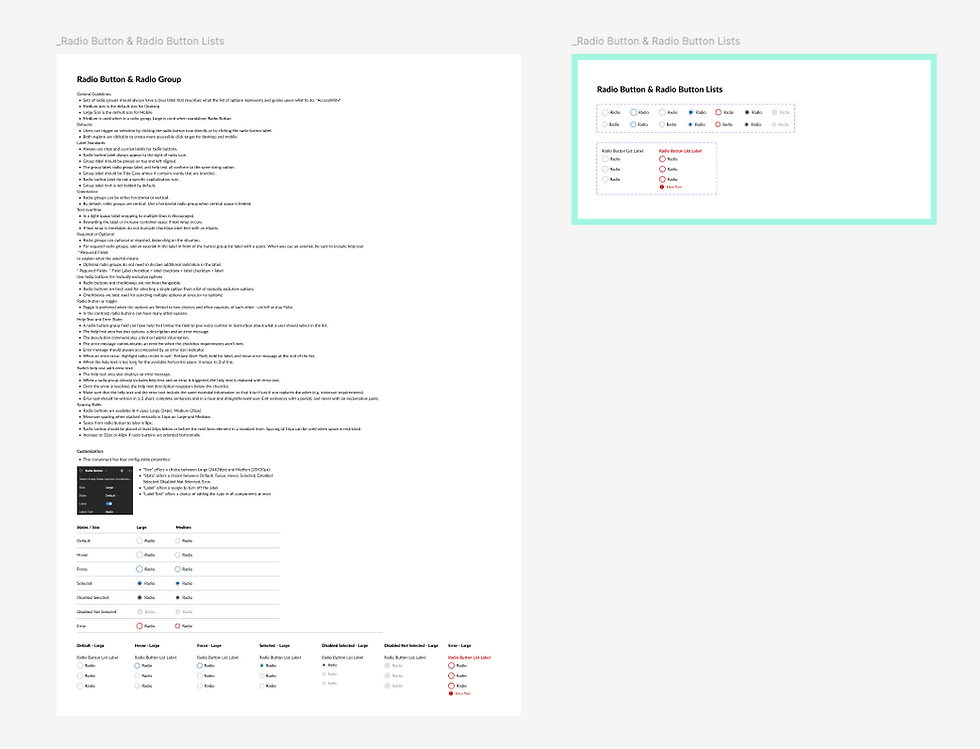
Scalable Design System for Enterprise Teams
Problem Statement
In today’s complex life sciences industry, consistent, scalable, and accessible digital products are critical. At Millipore, I worked on improving their comprehensive design system at the end of 2024. This case study outlines the challenges we faced, the process I followed, and the impact our work achieved.
Process

Organizing - My Favorite Part!
Instead of components being dumped into an alphabetical list, I categorized them by function and use case. I restructured the layers panel to improve visibility and made sure related elements were grouped intuitively. Rules and components, which had been split across separate pages, were merged into a cohesive, easy-to-navigate format.

Quick Wins
Originally, our Figma files were scattered across sprint-based shared drives, making it hard to find current designs or reusable assets. I reorganized everything in SharePoint by feature and product area, with clear naming and versioning. This cut search time, improved team efficiency, and laid the groundwork for a more scalable design system.

Ensuring Long-Term Success
A design system is never truly ‘done. To ensure updates could be efficiently managed, I established a master page for global updates. No more hunting for the latest changes—everything was accessible in one place. We also created a governance process to ensure ongoing refinement and version control. And to bridge the gap between design and backend work, we updated MUI components to align with our custom brand styles.
Previous Library
